The technical floor
Trace APIs, release paths, and digital assets until product intent becomes inspectable system behavior.
A field guide for the role that already arrived
Follow product intent from user signal to shipped behaviour across data, design, code, AI, and delivery—without outsourcing judgment or pretending to replace a specialist.
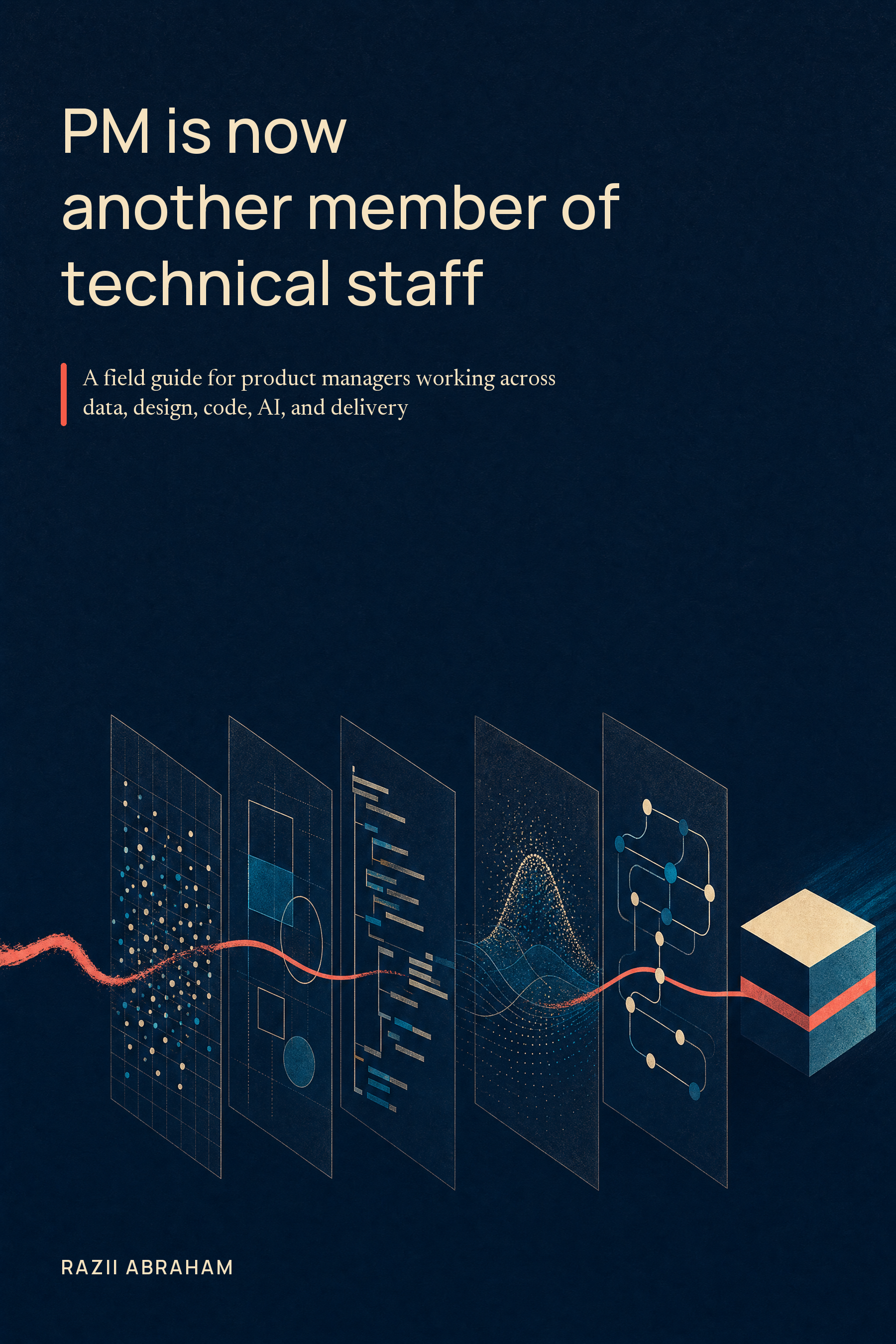
The new operating surface
PMs are still accountable for discovery, judgment, prioritisation, and user understanding. But the work now runs through systems a PM can inspect and participate in more directly—with appropriate access and specialist support: APIs, data, repositories, prototypes, evals, agents, QA, and releases.
The document-heavy loop
Product intent can fade as it travels through layers of interpretation.
The book’s operating chain
Every transition can lose intent. The book offers practices for keeping each one inspectable.
Inside the book
Five connected parts take you from system basics to an AI-augmented PM practice designed for day-to-day product work.
Trace APIs, release paths, and digital assets until product intent becomes inspectable system behavior.
Read product reality through queries, event models, and experiments—without turning a metric into a story too early.
Make ambiguity visible in flows and reusable systems, then reason carefully about what helps users move or stop.
Start with solution fit, define evaluation before launch, and design calibration loops around uncertain outputs.
Use agents, repositories, prototypes, and evidence as shared product instruments—not as shortcuts around judgment.
The five-chapter quick path
Read Chapters 1, 8, 13, 16, and 20. Use one bounded product problem and leave each chapter with an artifact you can bring into a real team conversation.
Map where you can ask, inspect, prototype, or contribute—and where specialist ownership must stay explicit.
Participation boundaryTurn actors, states, exceptions, and handoffs into acceptance criteria the whole team can inspect.
Flow-to-acceptance mapReplace demo confidence with tasks, rubrics, thresholds, failure severity, abstention, and review ownership.
Evaluation scorecardCarry objective, evidence, constraints, tools, output, and verification into an inspectable working context.
Portable context briefFollow the work through implementation, review, preview, rollout, measurement, and the next decision.
Ship decision recordA runnable companion, not bonus filler
The public companion pairs bounded artifacts with deterministic checks. Inspect API states, query the Sakila SQLite dataset, evaluate constructed AI outputs, and adapt the same records used throughout the book.
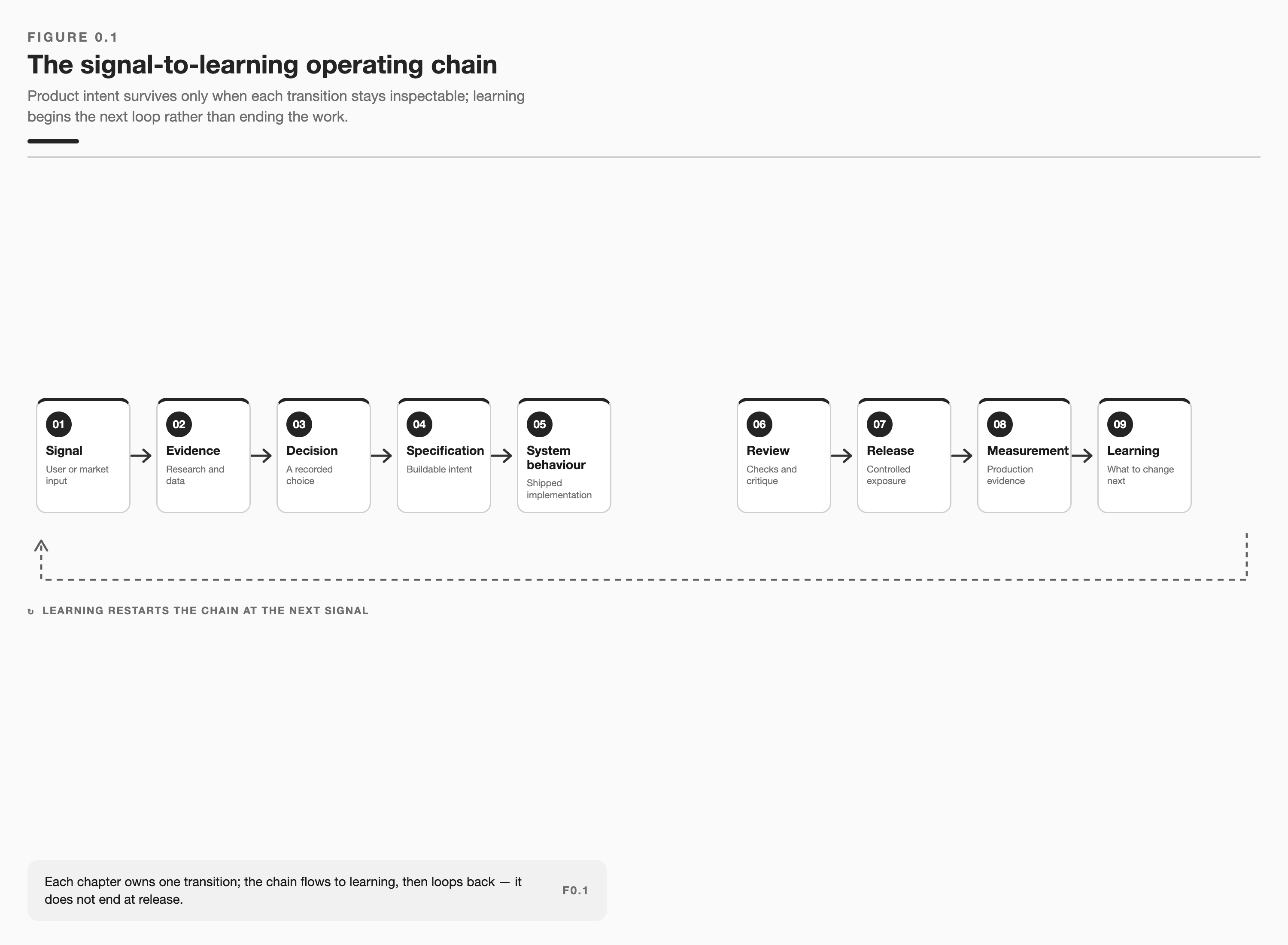
See where intent can fade between a user signal, a decision, shipped behaviour, and the next learning loop.
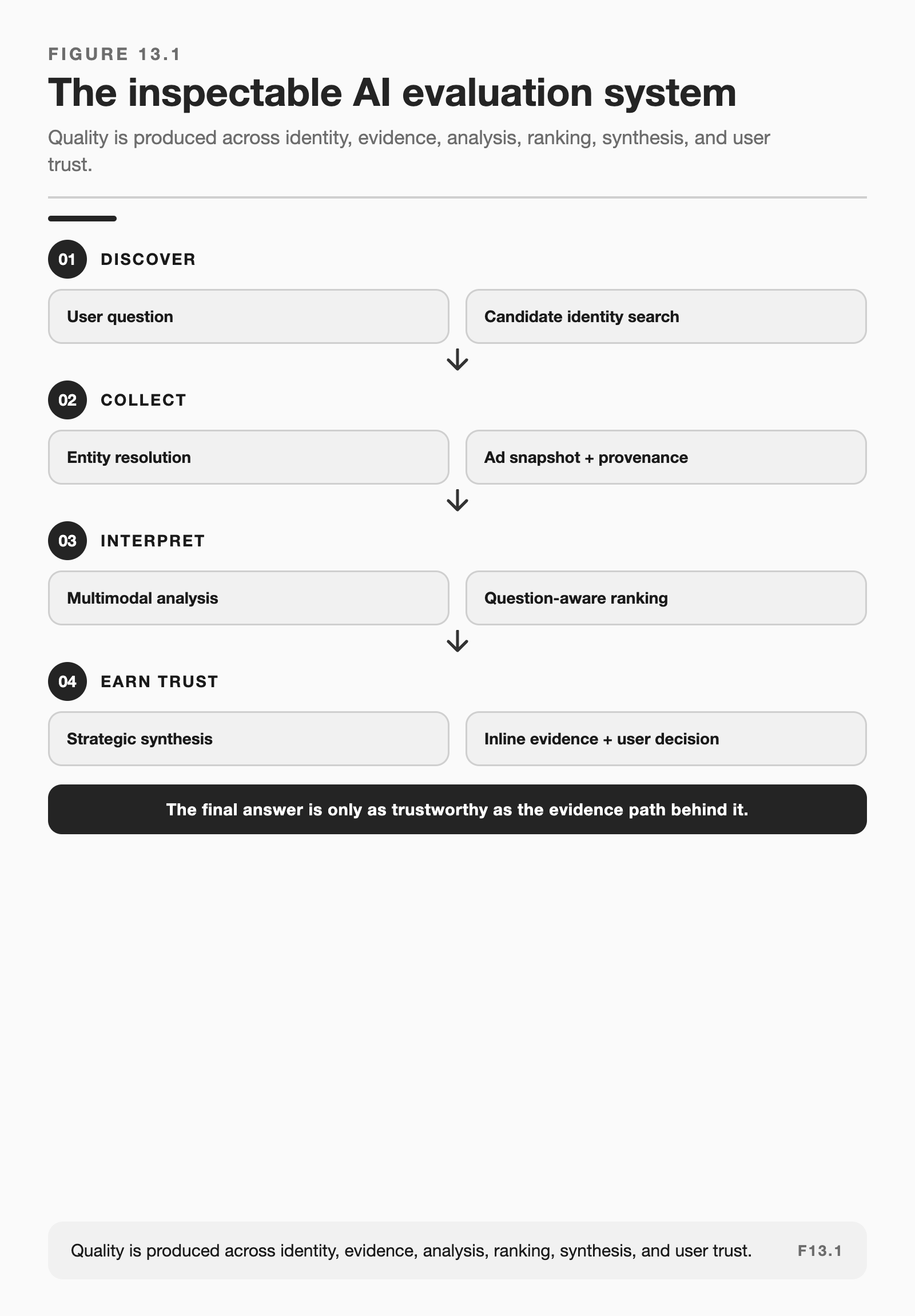
Turn a persuasive demo into a testable system with tasks, rubrics, gates, severity, abstention, and review ownership.
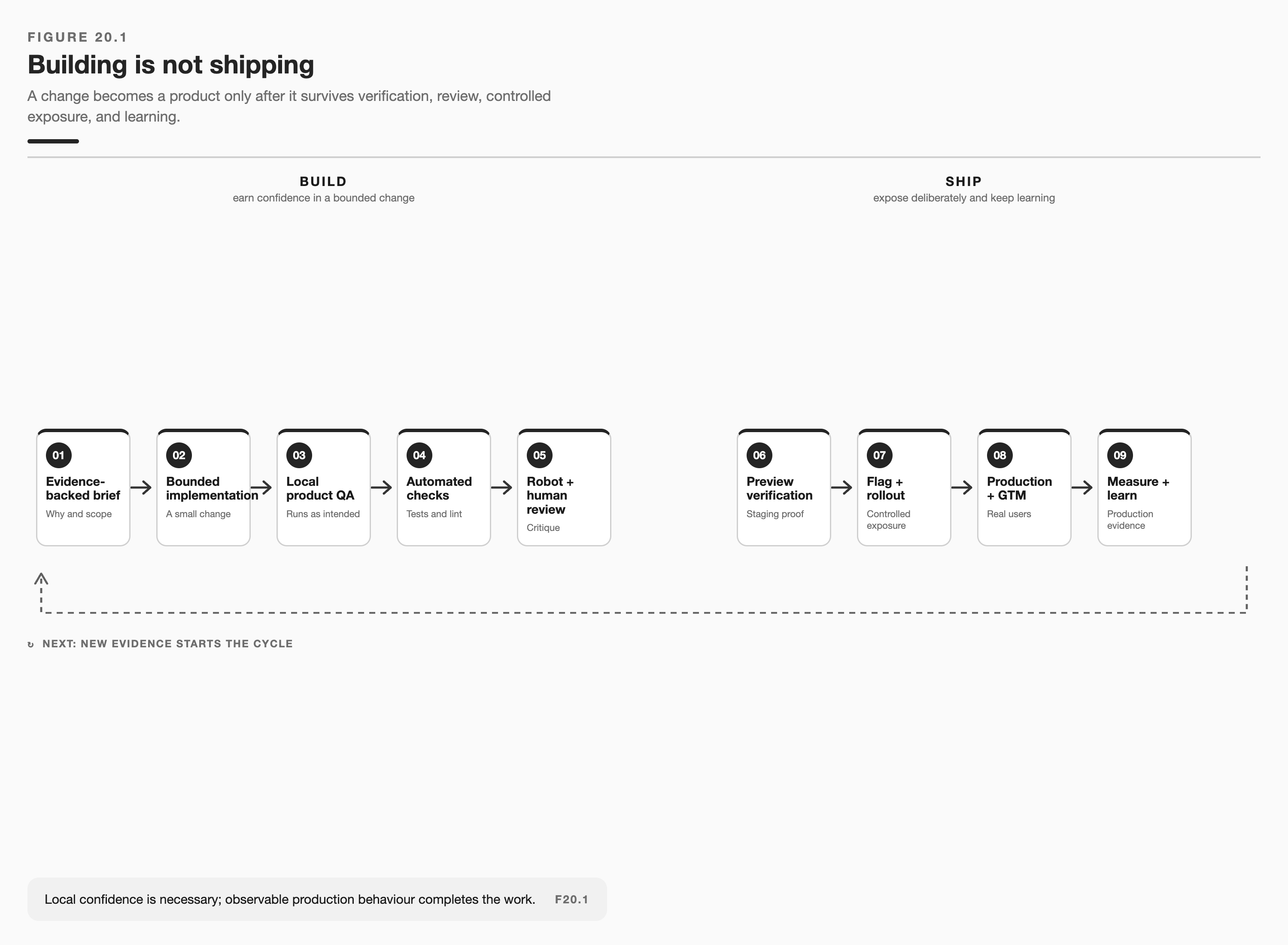
Follow the last mile through review, preview, rollout, measurement, and the decision that comes next.
The repository includes project skills for Codex and Claude Code. Both route into the same 20 chapter guides and 26 workbook records. What happens next still depends on the agent, its permissions, and the tools available. Selected chapters include narrow, no-key checks; none of the fixtures verifies a real product.
Open the public repository
Read before you buy
Download the curated reading sample and decide whether the book’s argument, evidence, and working style are useful for the product problems you actually own.
01The central argumentSee why AI expands participation without transferring specialist authority.
02Multiple evidence stylesRead practical frameworks alongside bounded firsthand product work.
03The delivery boundarySee how the book distinguishes generated output from verified, shipped work.
What the book helps you do
Ask sharper questions of engineers, designers, data teams, and AI systems.
Turn product ambiguity into inspectable artifacts that support testing and delivery.
Use coding agents without confusing generated output with verified work.
Design evaluation and calibration practices that keep humans in control of AI product decisions.
Follow product intent from signal to evidence, release, and learning.
Participate more responsibly inside technical delivery without pretending to replace a specialist.
Who it’s for
Written for people already in the role — a year or more of shipping features and sitting through the arguments around them. It isn’t a “how to become a PM” primer. Product designers and engineers who work alongside product teams tend to find it maps onto their side of the same work.
A year or more into the role: you already run discovery and delivery, and now want to work closer to the technical, data, design, and AI artifacts around your work.
You need a grounded way to define quality, evaluate uncertainty, and keep humans in control.
You want PMs to participate more deeply without blurring specialist roles or accountability.
Get the book
Choose the route built for where you are.

For Indonesian friends
Choose the digital edition or hardcover print through Akal, with a local checkout made for readers in Indonesia.

For international friends
Choose the Kindle edition or 6 × 9 inch hardcover. Both formats are live across multiple Amazon marketplaces.

Before you buy
No. This is not a programming textbook. It gives PMs a practical starting floor: concepts and exercises for inspecting systems, asking better questions, and participating more responsibly.
Readers in Indonesia can buy the digital edition or hardcover through Akal, with prices starting at IDR 99,000. Readers elsewhere can buy the Kindle edition or hardcover through Amazon across supported marketplaces.
No. The five-chapter quick path takes you through Chapters 1, 8, 13, 16, and 20. There is also a chapter-by-chapter path and a Chapters 18–20 capstone path.
Yes. The 67-page reading sample is a direct PDF download with no email form, account, or checkout.
The 471-page digital reading edition includes separate front and back cover pages around the complete 469-page interior. Print manufacture rounds that interior to an even 470-page block.
The Kindle edition is live in 13 Amazon marketplaces, while the 6 × 9 inch hardcover is live in 11. Amazon shows current pricing and the fulfilment options available for your destination.
Amazon handles Kindle delivery plus hardcover printing and fulfilment. Availability, shipping, taxes, and delivery estimates vary by destination and are shown during the Amazon checkout flow.
No. The argument is that AI expands where product judgment can be applied. It does not transfer specialist authority or reduce the cost of being wrong.
The field guide for the role that already arrived